Contact Us
The Parents' Corner:
Insights, Advice, and Inspiration
Cheating or Innovating? How AI is Shaping the Future of Learning at School and Home
AI is everywhere — from classrooms to kitchen tables — and for many teachers and parents, it’s raising more questions than excitement.
Are students using AI to cheat their way through school?
Or can we embrace it to help our kids learn in new, innovative ways?
As both a teacher and a parent, I’ve seen both sides of this new reality. Let’s unpack how AI is transforming learning, what concerns parents are sharing, and how we can use these tools responsibly to help our children succeed.
AI and Cheating: The Concern That Keeps Parents Up at Night
One of the top conversations happening on Reddit and parent forums today sounds like this:
“Students are cheating their way through life, content to let an algorithm do the thinking.”
“Some kids are using AI undetected, which drives up grades — and the expectations — for everyone else.”
These comments reflect what many parents are feeling — frustration, confusion, and even fear.
Recent surveys echo these concerns: while 60% of teachers believe AI can personalize learning, about 35% worry about misuse in schools.
And those worries aren’t baseless. Tools like ChatGPT or AI essay generators can produce work that seems polished — but doesn’t always reflect a student’s true understanding.
However, here’s the truth: AI itself isn’t the problem. Misuse is.
When used ethically, AI can support deeper learning. When used irresponsibly, it can hinder growth. The key lies in teaching students how to use AI the right way.
How Teachers Can Turn AI from a Shortcut into a Skill Builder
Instead of banning AI, educators can use it to build skills that matter.
For example, instead of asking students to “write an essay,” teachers can ask:
“Explain how this idea applies to your life.”
“What did you learn from using AI to draft this?”
“Now rewrite the response in your own words.”
These tasks require reflection, reasoning, and personal voice — qualities that AI cannot replicate.
As an educator, I’ve also seen the power of AI when used for personalized practice. Platforms like Khan Academy, IXL, and Socratic help students work independently, filling learning gaps while giving teachers real-time insight into where a student is struggling.
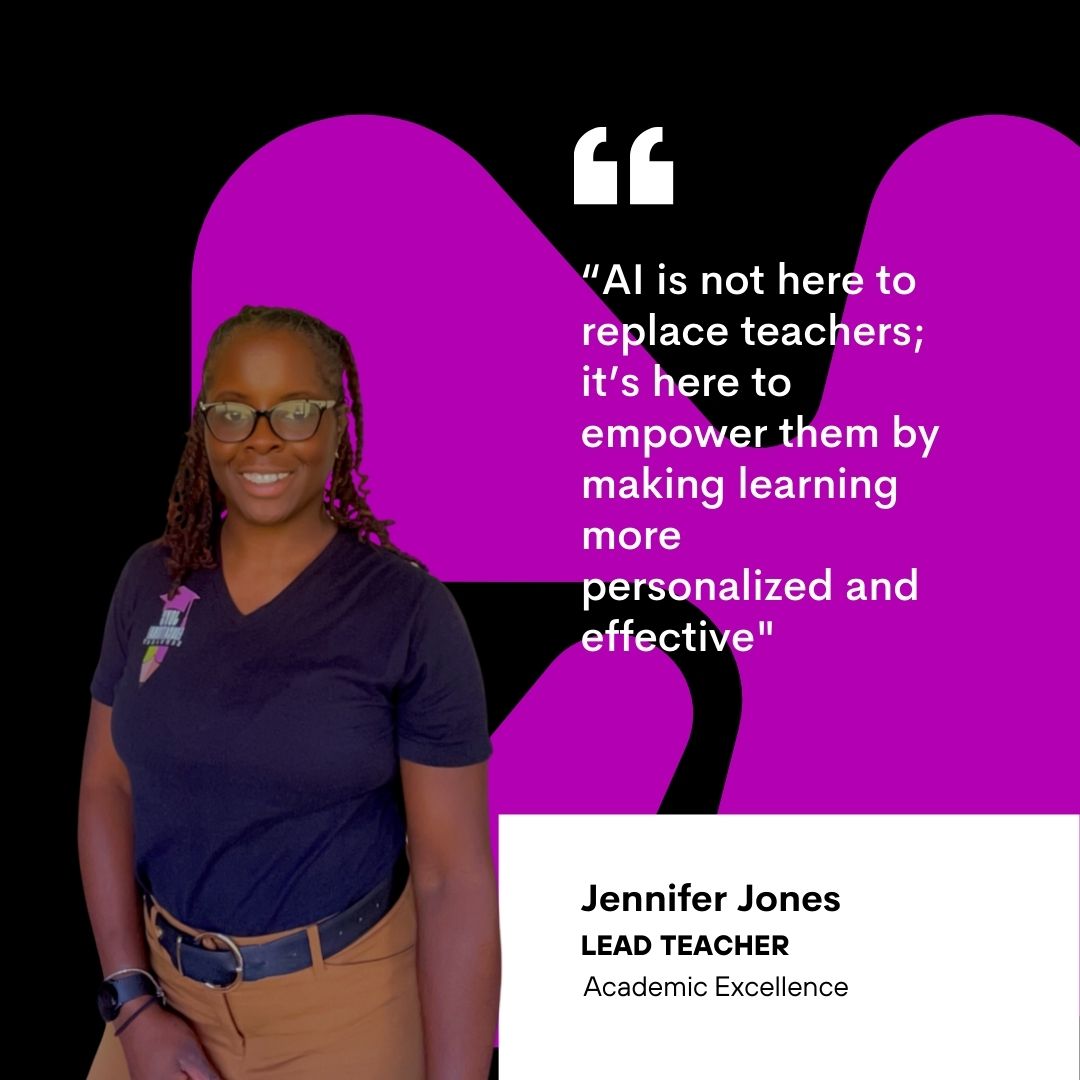
The goal isn’t to replace teachers — it’s to enhance instruction, giving us more time to focus on critical thinking, problem-solving, and creativity.
How Parents Can Use AI at Home — Without Losing the Human Touch
Parents are navigating this just as much as teachers are.
Recent studies show 85% of parents want to learn how to use AI to support their child’s education, but many don’t know where to start.
AI can actually be a great ally when used correctly at home.
Here are a few ways I use it with my own family:
💡 For writing help:
When my nephew struggles to summarize a science experiment, I’ll prompt ChatGPT with:
“Ask him one question at a time to help him write a summary for his science project.”
It keeps him thinking, not copying.
🧮 For math practice:
Tools like Socratic or Photomath can explain steps, not just give answers — but I always ask him to re-explain what he learned in his own words.
✍🏾 For editing:
I let him use Grammarly, but he still reads his work out loud to check for meaning.
The difference is in how we use the tools — AI should support thinking, not replace it.
Ethics, Oversight, and Digital Citizenship
AI in education isn’t just about performance — it’s about responsibility.
Parents and teachers must work together to help kids develop digital ethics and AI literacy.
That includes:
Talking about data privacy (what information these tools collect)
Discussing algorithmic bias (AI isn’t always neutral)
Emphasizing that human judgment and creativity are still irreplaceable
This balance ensures AI becomes a tool for empowerment, not dependency.
Common Questions Parents Are Asking About AI in Education
Q: Is using AI for homework cheating?
➡️ Not automatically. It depends on how it’s used. If a student uses AI to think through ideas, check grammar, or clarify steps — that’s learning. Copying answers? That’s cheating.
Q: How can I tell if my child is using AI responsibly?
➡️ Ask them to explain their process. If they can’t describe how they got an answer, the tool is doing more thinking than they are.
Q: Should schools ban AI tools?
➡️ No. Banning AI just pushes use underground. Instead, schools should teach students how to use AI ethically, transparently, and creatively.
Q: How can parents stay involved?
➡️ Try AI tools yourself! Ask teachers how they’re handling AI use in class. Encourage conversations about honesty, curiosity, and balance.
Shifting the Perspective: From Fear to Empowerment

The truth is, AI isn’t going away — and neither are the fears around it.
But we have two choices: fear the change or guide our children through it.
As a teacher, I’ve seen how AI can transform the classroom.
As a parent, I’ve seen how it can make learning at home more engaging.
If we teach our kids to use AI as a tool — not a shortcut — we’ll help them build skills that last far beyond the classroom.
📌 Join the Conversation:
How are you using AI at home or in school?
Share your experiences in the comments or explore more.
Let’s keep building bridges between innovation and integrity — one student, one family, and one conversation at a time.
About the Author
Jennifer Jones is the founder of Joy's Educational Services, a Florida homeschool consultant, educator, and former classroom teacher with more than 16 years of experience helping students and families succeed. She specializes in homeschool planning, curriculum selection, scholarship support, math education, and personalized learning programs for Florida families.

(727)295-7622
www.joyseducationalservices.org
🕒 Hours of Operation
🏠 Homeschool: 9AM–3PM
📚 Virtual Tutoring: 10AM–5PM
Mon–Thurs


