Contact Us
The Parents' Corner:
Insights, Advice, and Inspiration
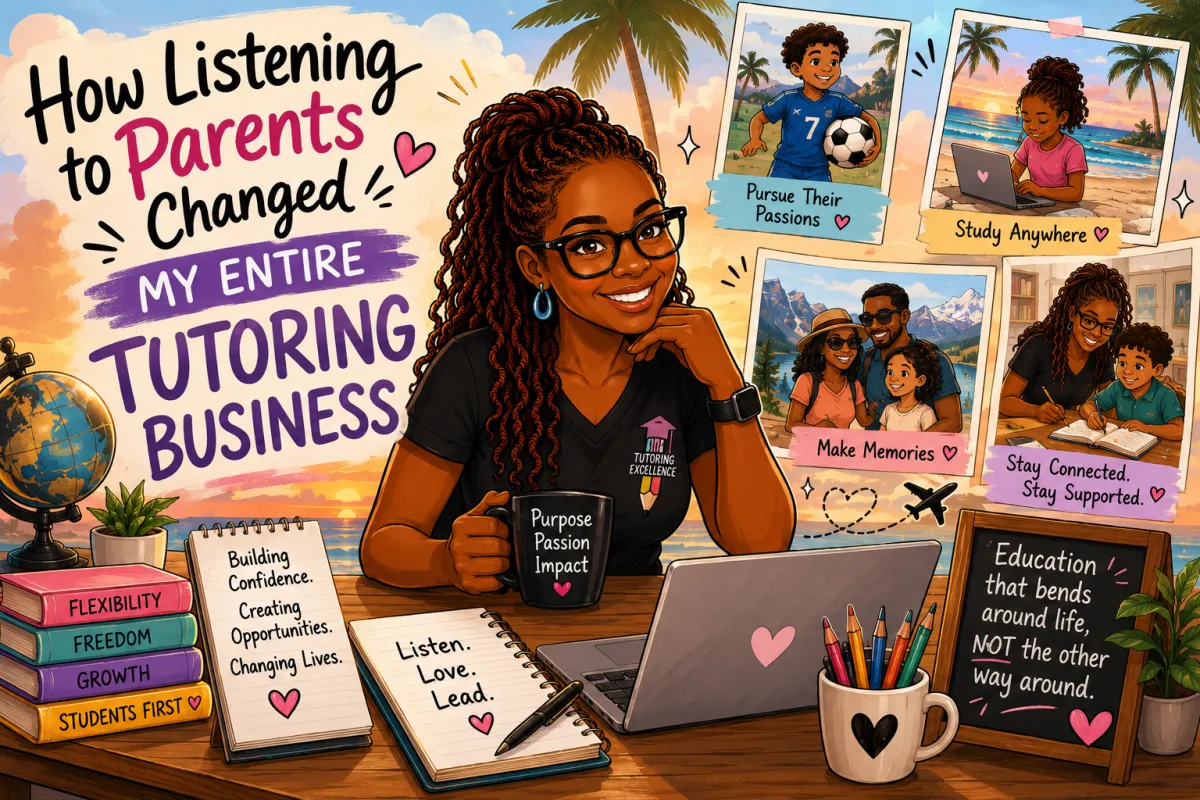
How Listening to Parents Changed My Entire Tutoring Business
The Dream of Virtual Tutoring
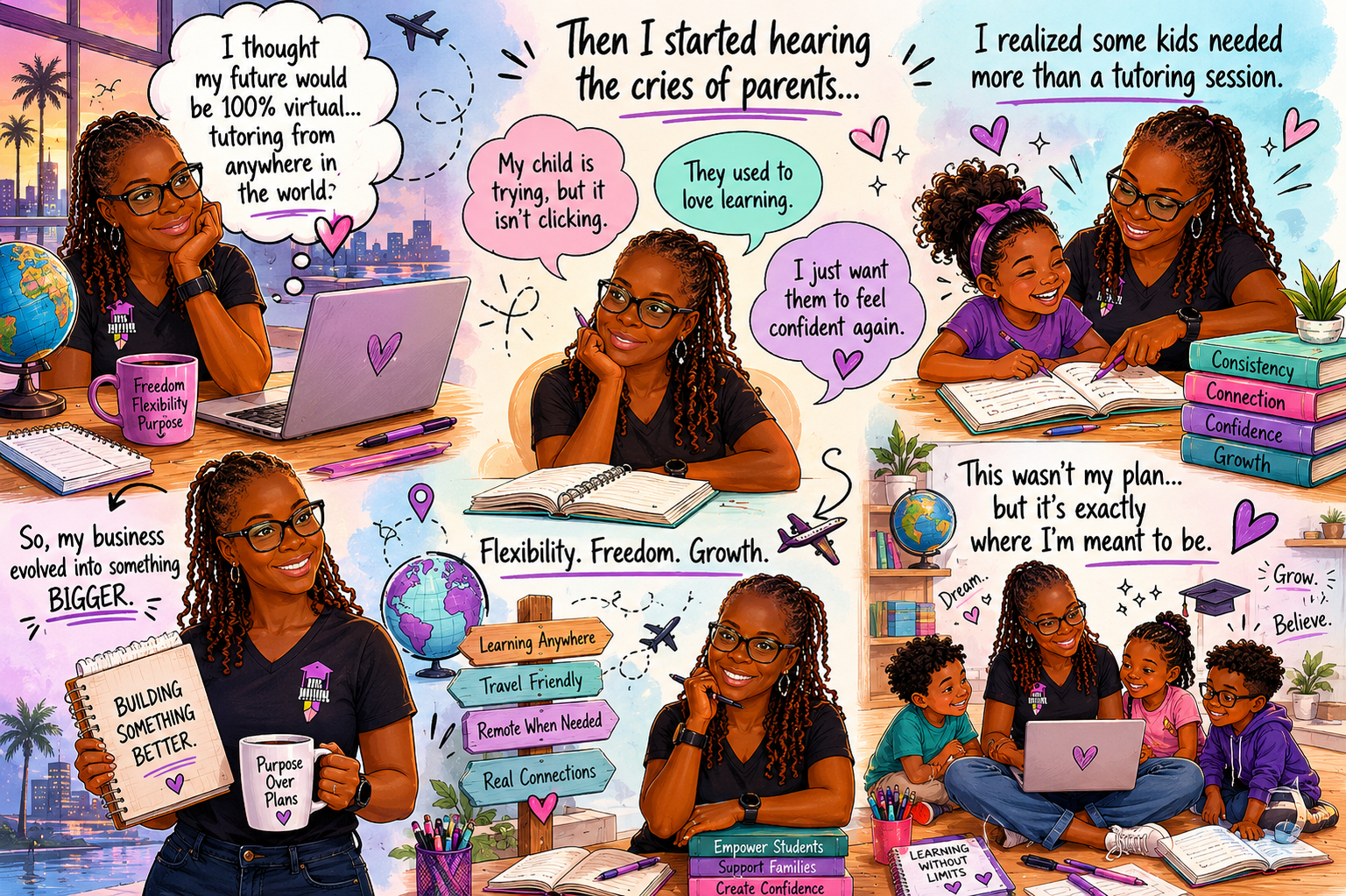
A few years ago, I thought I had my future completely figured out.
I was building a successful virtual tutoring business, working with students online, and creating a business model that gave me absolute freedom. I had a vision board filled with laptops on beaches and in coffee shops in different cities. I imagined myself traveling, working remotely, and helping students grow academically from wherever I happened to be.
And honestly? I loved that version of my life.
Virtual tutoring opened so many doors. It allowed me to connect with families across different areas, support students in ways that fit seamlessly into their hectic schedules, and build relationships that went far beyond academics. I truly believed that the 100% online, hourly tutoring lane was going to be my forever home. It was convenient, it was scalable, and it worked.
Until it wasn’t enough.
What Parents Were Really Telling Me
Over time, a subtle but undeniable shift started happening. The conversations I was having with parents began to change. They were getting deeper, heavier, and much more transparent.
At first, a parent would call because their child needed help with a specific math standard or was falling behind in reading. We’d set up our weekly virtual hour, target the skill, and move on.
But gradually, our phone calls became less about test scores and more about frustration, fear, and exhaustion.
Behind the screens, parents were overwhelmed.
Living and working right here in the Volusia and Flagler County areas, I had a front-row seat to a massive educational shift. Florida’s landscape of school choice was exploding, with programs like the PEP (Personalized Education Program) scholarship under Step Up for Students giving families the financial freedom to look outside traditional brick-and-mortar schools.
But with that freedom came an unexpected burden.
I started hearing the raw truth of what was happening behind closed doors. Parents who had pulled their kids out of overcrowded classrooms were drowning in the logistics of trying to piece together a curriculum at home. They were spending their evenings acting as full-time teachers, tech support, and emotional coaches—doing absolutely everything they could—and still watching their kids struggle.
Even families who turned to full-time virtual schools as a rescue raft were hitting a wall. The flexibility was there, but the human connection was missing. I listened to local parents express concern that their children were becoming isolated, unmotivated, and emotionally disconnected from learning.
I kept hearing the same phrases over and over again:
“My child is trying so hard, but it’s just not clicking.”
“They used to love learning.”
“I don’t even care about an A anymore. I just want them to feel confident again.”
Those conversations didn’t just stay with me. They kept me up at night.
Why Tutoring Alone Wasn’t Enough
The more families I spoke with from Palm Coast down to Daytona Beach and St. Augustine, the more the reality became impossible to ignore: a one-hour tutoring session once or twice a week often wasn’t enough to fully support what many students were experiencing emotionally and academically.
A single hour couldn’t undo the anxiety of a seven-hour school day where a child felt invisible. It couldn’t replace the consistency and connection some students lost in fully online programs. And it couldn’t solve the challenges parents faced trying to navigate education alone.
These kids didn’t just need an hourly tutor.
They needed:
consistency
individualized instruction
accountability
confidence-building
smaller group learning
emotional support
flexibility without isolation
Parents were searching desperately for a middle ground—a learning environment that offered strong academics and real accountability without the rigidness of traditional systems.
And honestly, I was searching for that too.
What Is a Microschool?
A microschool is a small, personalized learning environment that blends the flexibility of homeschooling with the structure, accountability, and support many families are looking for.
Unlike traditional classrooms, microschools often focus on:
smaller group sizes
individualized pacing
stronger teacher-student relationships
flexible schedules
personalized learning plans
hybrid learning opportunities
For many families, it provides an alternative to overcrowded classrooms while still offering consistency, structure, and community.
Why My Business Started Evolving
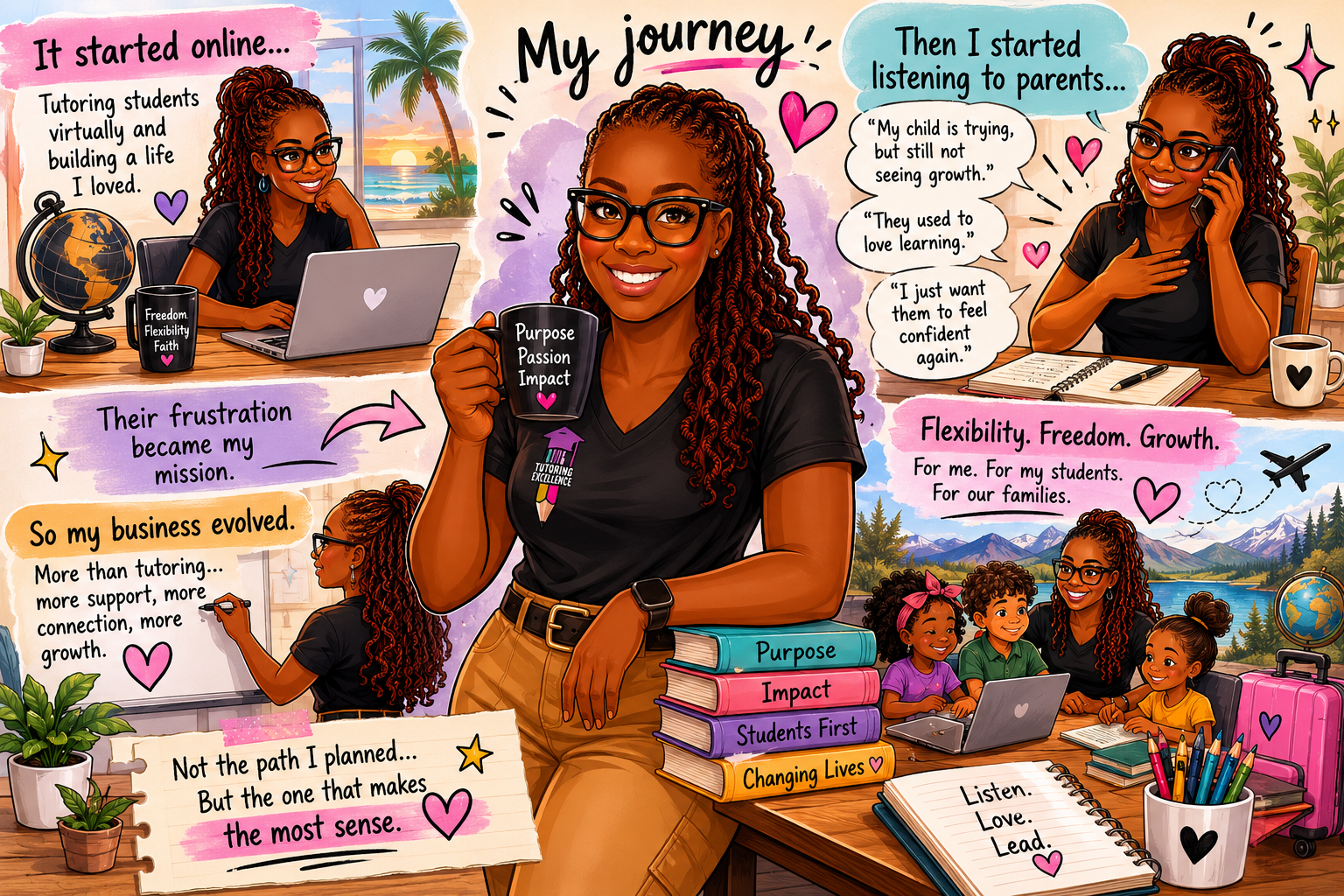
Without even realizing it, because I chose to listen instead of simply selling another tutoring package, my business began to evolve.
What began as academic support slowly transformed into something much bigger, much deeper, and entirely intentional.
I found myself building a highly personalized learning environment where students could receive rigorous academic instruction, daily structure, and emotional encouragement in a way that actually fit their unique learning styles and their families’ lives.
And the funny part is… this was never the plan.
If you had told me a few years ago that I would be creating a model that looked more like a microschool or individualized hybrid learning environment, I probably would have laughed. That world honestly wasn’t even on my radar.
I was focused on the laptop lifestyle.
The freedom.
The travel.
The flexibility.
But once you truly listen to the heartbeat of overwhelmed parents, it becomes impossible to ignore the gaps in our current education system.
You can’t unsee the need.
The Rise of Personalized Learning in Florida
Across Florida, more families are actively searching for alternatives to traditional education.
Some families are looking for homeschool support.
Others want smaller group learning.
Some want flexibility for athletics, travel, or medical needs.
Others simply want their child to feel seen again.
Programs like Step Up for Students and the PEP scholarship have opened the door for families to explore more personalized education models that better fit their child’s academic and emotional needs.
And honestly, I think families are asking better questions now.
Not:
“What school has the best rating?”
But:
“Where will my child thrive?”
That’s a completely different conversation.
Who Thrives in This Type of Learning Environment?
This type of personalized learning environment often works well for:
students struggling in large classrooms
homeschool families needing structure or accountability
students who benefit from smaller groups
students lacking academic confidence
families wanting flexibility for travel or sports
students who need individualized pacing
children overwhelmed in traditional school settings
families searching for more connection and support
I’ve watched students go from avoiding math completely to volunteering answers confidently within weeks of being in a smaller, supportive environment.
I’ve seen students who struggled emotionally in traditional classrooms completely transform once they felt safe enough to ask questions again.
Sometimes students don’t need less intelligence.
They need more support.
Freedom Looks Different Now
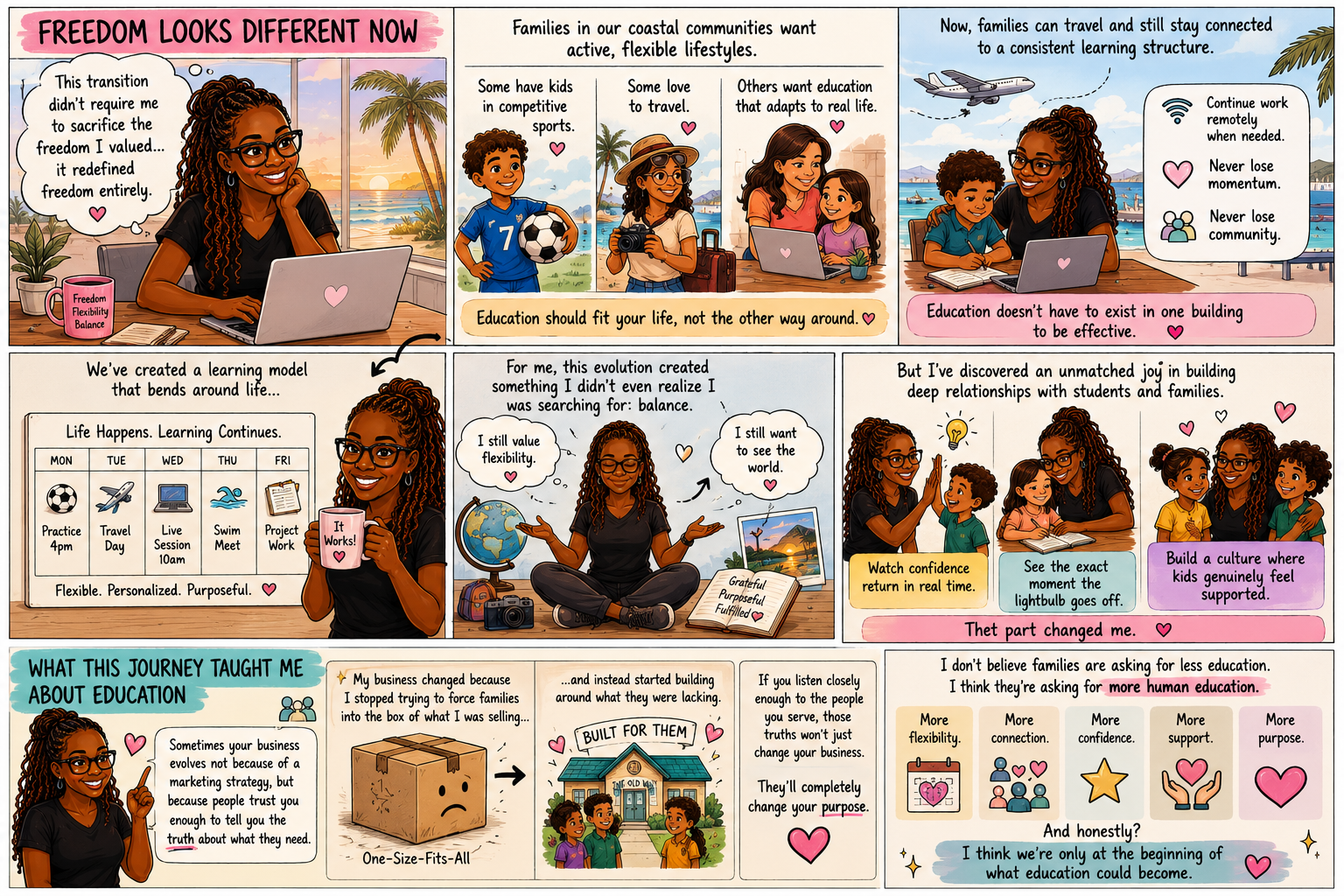
What I love most about this transition is that it didn’t require me to sacrifice the freedom I valued so much. In many ways, it redefined freedom entirely.
Families in our coastal communities want active, flexible lifestyles. Some have children heavily involved in competitive sports. Some love to travel. Others simply want an education that adapts to real life instead of forcing life to revolve around school schedules.
Now, the families I work with can travel and still stay connected to a consistent learning structure. Students can continue their work remotely when needed without losing momentum or community.
Education no longer has to exist only inside one building or one rigid system to be effective.
We’ve created a learning model that bends around life instead of forcing a child’s life to bend around a bell schedule.
And for me personally, this evolution created something I didn’t even realize I was searching for: balance.
I still value flexibility.
I still want to see the world.
But I’ve also discovered an unmatched joy in building deep relationships with students and families right here in my own community.
I get to watch confidence return in real time.
I get to see the exact moment the lightbulb goes off.
I get to build a culture where kids genuinely feel supported.
That part changed me.
What This Journey Taught Me About Education
This journey taught me one of the greatest lessons of my entrepreneurial life:
Sometimes your business evolves not because of a marketing strategy, but because people trust you enough to tell you the truth about what they need.
My business changed because I stopped trying to force families into the box of what I was selling and instead started building around what they were lacking.
And if you listen closely enough to the people you serve, those truths won’t just change your business.
They’ll completely change your purpose.
I don’t believe families are asking for less education.
I think they’re asking for more human education.
More flexibility.
More connection.
More confidence.
More support.
More purpose.
And honestly?
I think we’re only at the beginning of what education could become.
Ready to Explore a Different Approach to Learning?
If you’re a parent who feels like your child is capable of more but needs a different environment, more support, or a more personalized approach, you are not alone.
Every child learns differently.
Every family’s needs are different.
And education does not have to be one-size-fits-all to be successful.
Whether your family is exploring homeschool support, personalized learning, virtual tutoring, hybrid education, or simply searching for a learning environment where your child can rebuild confidence and thrive, I would love to connect with you.
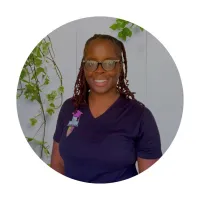
At Joy’s Educational Services, my goal has never been to force students into a system that doesn’t fit them. My goal is to help students grow academically, emotionally, and confidently in a way that works for their real lives.
✨ Schedule a free 30-minute consultation and let’s talk about your child’s goals, challenges, and what support could look like for your family.
📍 Palm Coast, Florida
💻 Virtual & Hybrid Learning Options Available
📚 Personalized Academic Support for Students, Grades 4–Algebra 1
(727)295-7622
www.joyseducationalservices.org
🕒 Hours of Operation
🏠 Homeschool: 9AM–3PM
📚 Virtual Tutoring: 10AM–5PM
Mon–Thurs


