
Why Does My Homeschooled Child Hate Math?
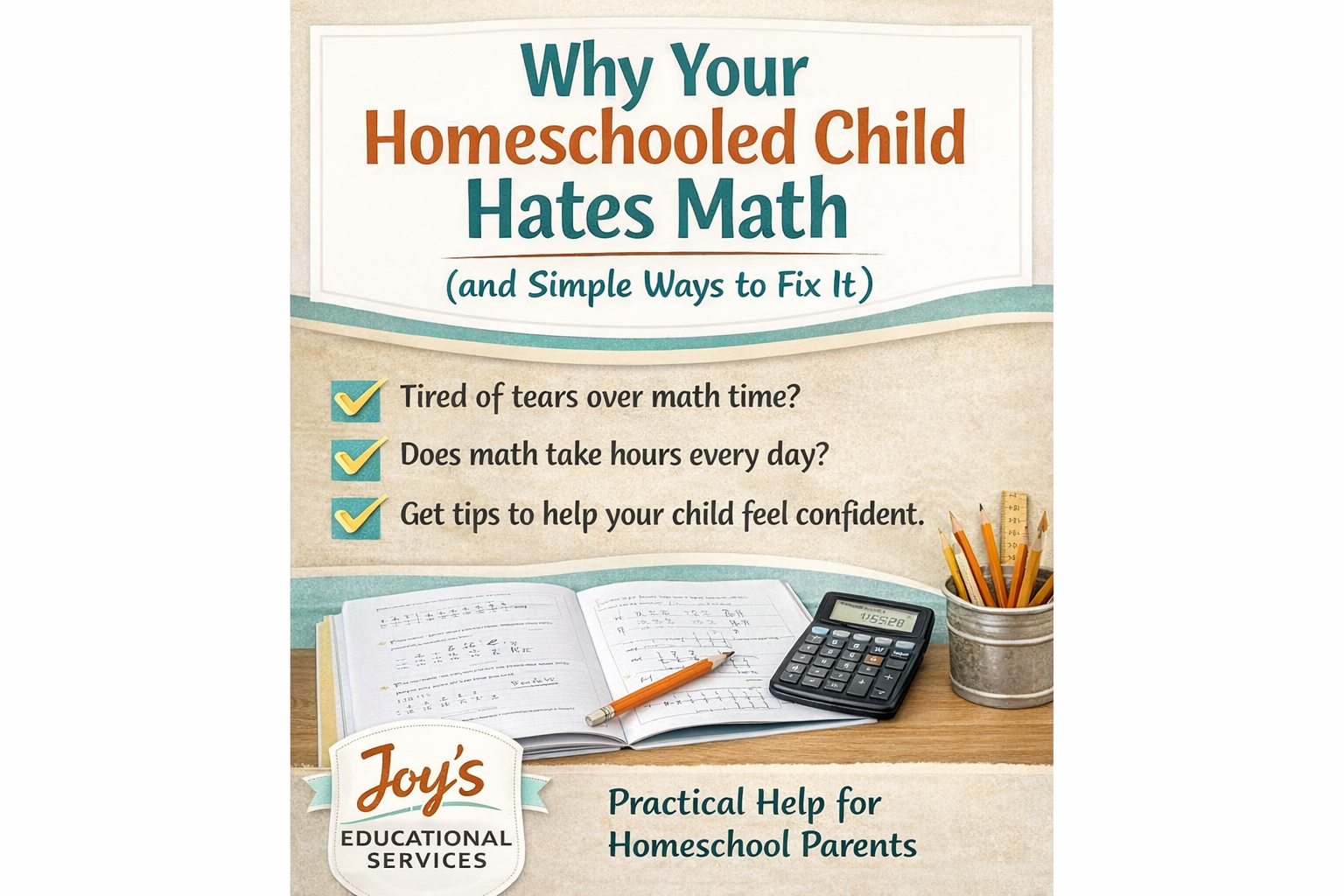
Real Ways to Reduce Math Frustration and Build Confidence
If you have ever caught yourself Googling things like…
“Why does my child cry during math?”
“Why is homeschool math taking us hours?”
or even
“Am I doing this wrong?”
Take a deep breath. You are not alone.
Math frustration is one of the most common struggles I hear from homeschool parents. What usually starts with good intentions can slowly turn into daily stress — tears, resistance, and a lot of second-guessing from both the child and the parent.
But here is the truth I want families to understand:
Most math frustration is not about ability.
It is usually about pace, learning gaps, or confidence that has taken a hit somewhere along the journey.
When Math Takes Too Long Every Day
One of the biggest concerns parents share is,
“Why does math take us so long?”
In many cases, students are trying to learn new skills without fully understanding earlier concepts. Homeschooling actually gives you a beautiful advantage here — the flexibility to slow down.
There is no race.
There is no pressure to move on just because a calendar says so.
When students are given time to rebuild their foundation, math becomes more manageable and less overwhelming. Small moments of understanding start replacing daily frustration.
How Do I Teach Math If I’m Not Confident in Myself?
This is another huge question parents ask.
And honestly, it is a very real and valid feeling.
You do not have to be a math expert to support your child. What matters most is creating a calm learning environment, staying consistent, and being open to getting support when needed.
Sometimes the best thing a parent can do is recognize when a fresh explanation, structured plan, or outside encouragement could make a difference. Homeschooling was never meant to feel like you have to carry everything alone.
Bringing Math Into Real Life
A powerful way to reduce resistance is helping children see that math is not just a workbook subject.
Math shows up in everyday life —
measuring ingredients while cooking,
tracking sports performance,
managing allowance or budgeting,
building or organizing projects around the home.
When students begin to connect math to real-world situations, their mindset shifts. It becomes less about getting the right answer on paper and more about learning a life skill they can actually use.
Rebuilding Math Confidence Step by Step
Confidence is truly the game-changer.
Long, stressful math sessions often drain motivation quickly. Instead, short and focused practice can help students experience success more often. Celebrating small wins — understanding a concept, solving a challenging problem, or simply staying engaged — builds the belief that progress is possible.
And when students start believing they can learn math, their effort naturally grows.
You Don’t Have to Figure This Out Alone
If you are wondering whether it is time to get extra help, that is a question many homeschool parents ask. The right support can bring clarity, structure, and encouragement — not just for the student, but for the entire family.
Homeschool math does not have to feel like a daily battle.
With patience, the right pace, and personalized strategies, frustration can decrease and confidence can grow.
Because at the end of the day, our goal is bigger than math worksheets.
We are raising learners who are willing to try, make mistakes, and keep moving forward.
And that mindset will carry them far beyond any single lesson.
f homeschool math has started to feel stressful in your home, you are not alone.
With the right support and pacing, your child can rebuild confidence and begin making real progress.
✨ If you would like personalized guidance, you can schedule a free consultation to discuss your child’s math needs and next steps.
👉 Schedule your consultation here
https://links.fullscope.tools/widget/bookings/consult14