AI Isn't Going Away. It's Time We Teach Our Kids How to Use It.
By Jennifer Jones | Joy's Educational Services
I was thinking about how much technology has changed since I was a child. When computers first started becoming popular, there were so many concerns about what they would do to the next generation. People worried that children would stop writing, become too dependent on computers, and forget how to do things for themselves.
Well, here we are years later, and people are still writing with paper and pencil. Maybe not as much as before, but writing certainly hasn't disappeared. Computers have become part of almost everything we do, from running businesses and communicating with family to shopping, banking, and education. Most of us couldn't imagine going through an entire day without using some form of technology.
And now we're having a similar conversation about artificial intelligence.
Everywhere you turn, someone has something to say about AI. Some people are excited about it, while others are worried about what it's going to do to our children. Will students stop thinking for themselves? Will they use it to cheat? Will they become so dependent on it that they can't complete assignments without help?
I understand those concerns, but I also think we're spending so much time talking about what could go wrong that we're overlooking what could go right.
Instead of focusing only on keeping students from using AI, why aren't we spending more time teaching them how to use it correctly?
Technology Has Always Changed Education
Think about when calculators became common in classrooms. There were concerns that students wouldn't learn how to do math because they could just punch numbers into a calculator. And yes, students still need to understand how to add, subtract, multiply, and divide without depending on one. But calculators didn't eliminate the need to understand math. They became another tool students could use as they moved into more advanced concepts.
The same thing happened with computers, the internet, and spell-check. We adjusted how we taught, what we expected students to know, and when it was appropriate to use those tools.
Now we're at that point again with AI.
The difference is that AI can do much more than a calculator or spell-check. It can write an essay, solve a math problem, create a presentation, and answer questions in seconds. That's exactly why I believe we need to teach students how to use it properly instead of assuming they'll figure it out on their own.
How We're Using AI With Our Students
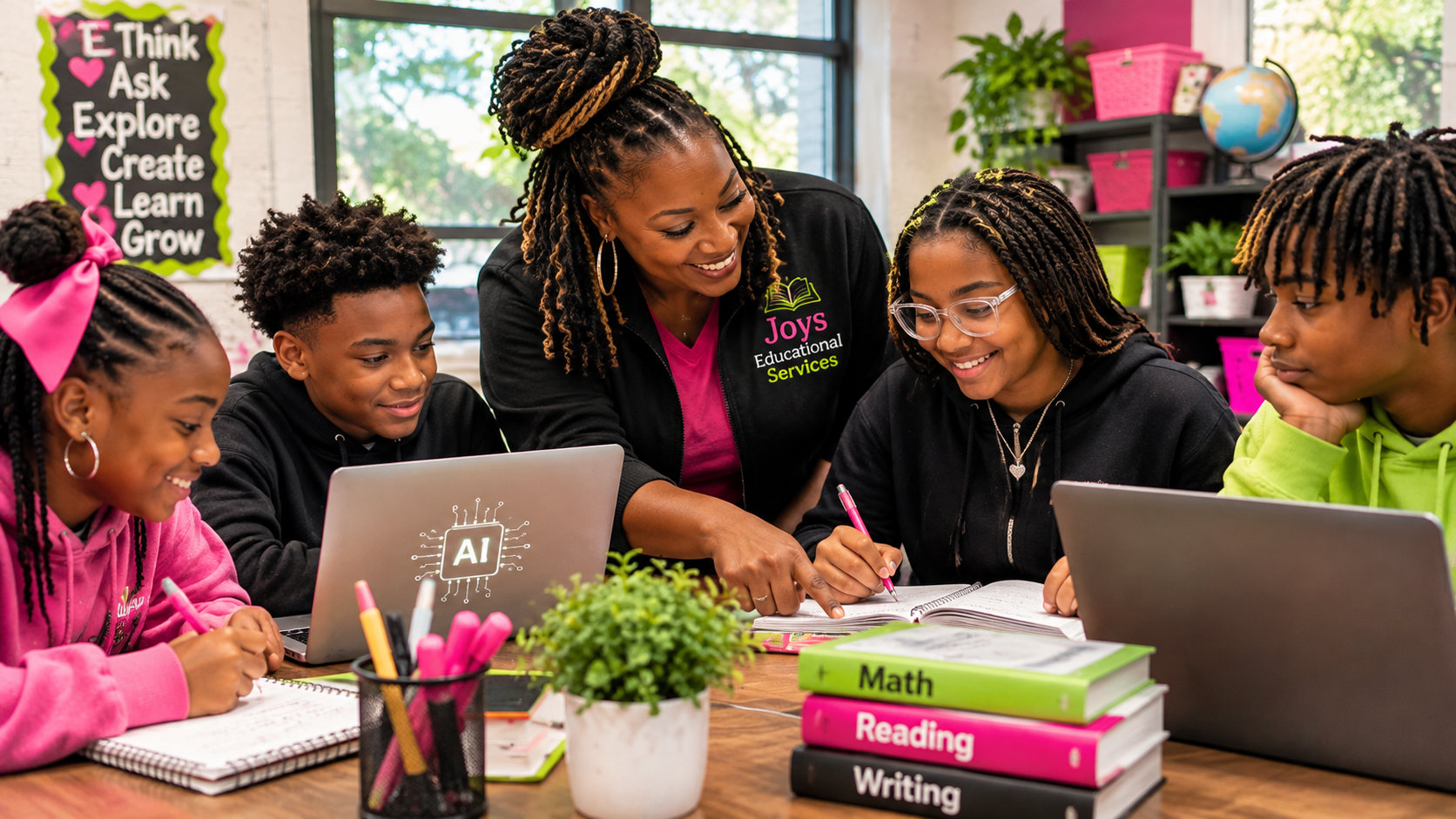
At Joy's Educational Services, we use technology every day, and AI has become another resource in our learning environment.
One of the biggest challenges when working with multiple students is that I can't be everywhere at once. I may be helping one student with math while another student is struggling to understand the directions for a writing assignment. In the past, that student would have to wait until I finished helping someone else.
Now, depending on what they need help with, they can use AI to get started.
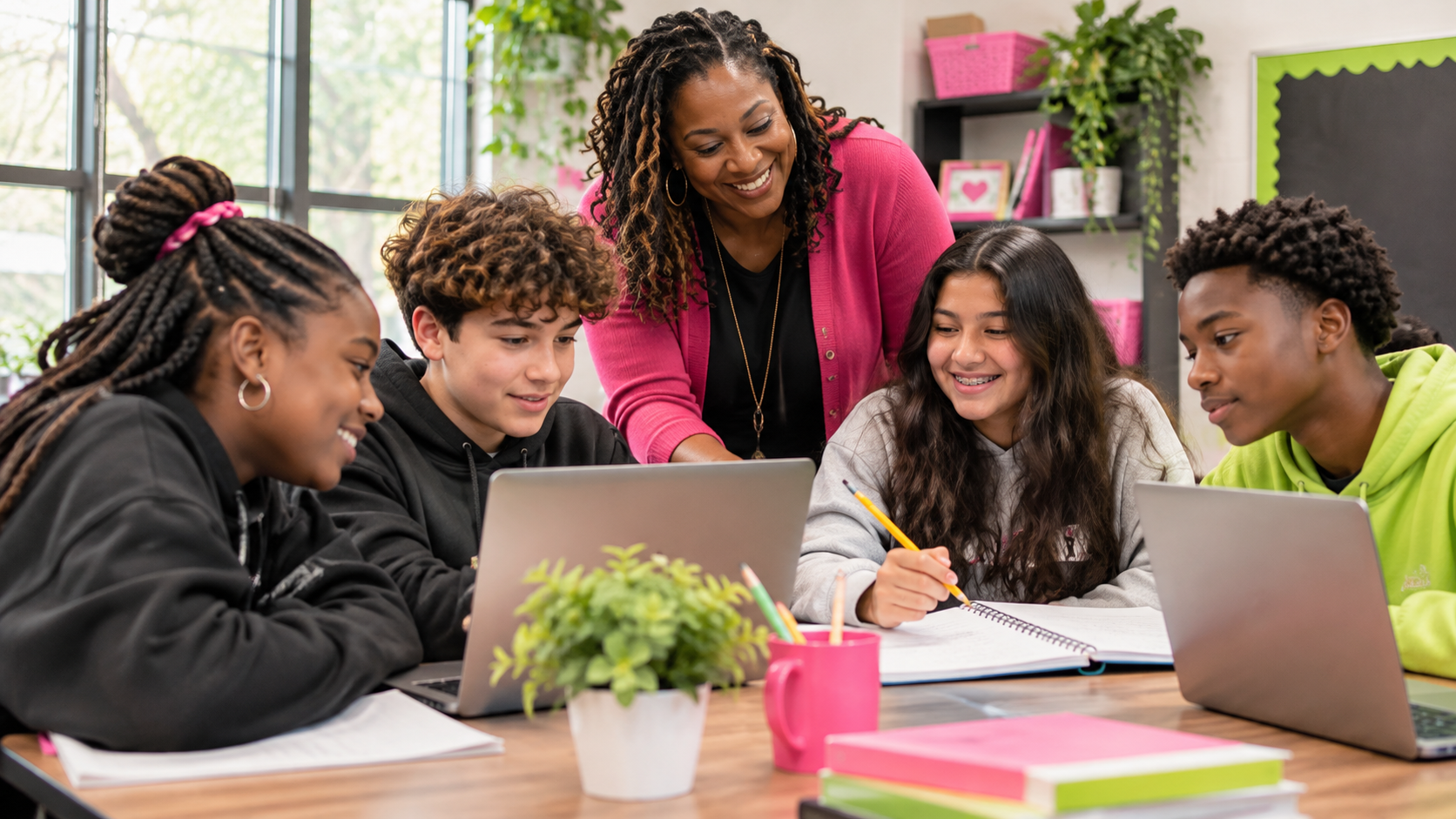
But here's the important part. We've been teaching our students how to ask AI for help without having it complete their assignments.
For example, sometimes a student will have a writing prompt that asks several questions at once. They may understand the topic but struggle with figuring out exactly what they're supposed to write about. Instead of asking AI to write the paragraph, they've learned to ask it to break the prompt into smaller questions. They can answer those questions one at a time and then use their own responses to put their writing together.
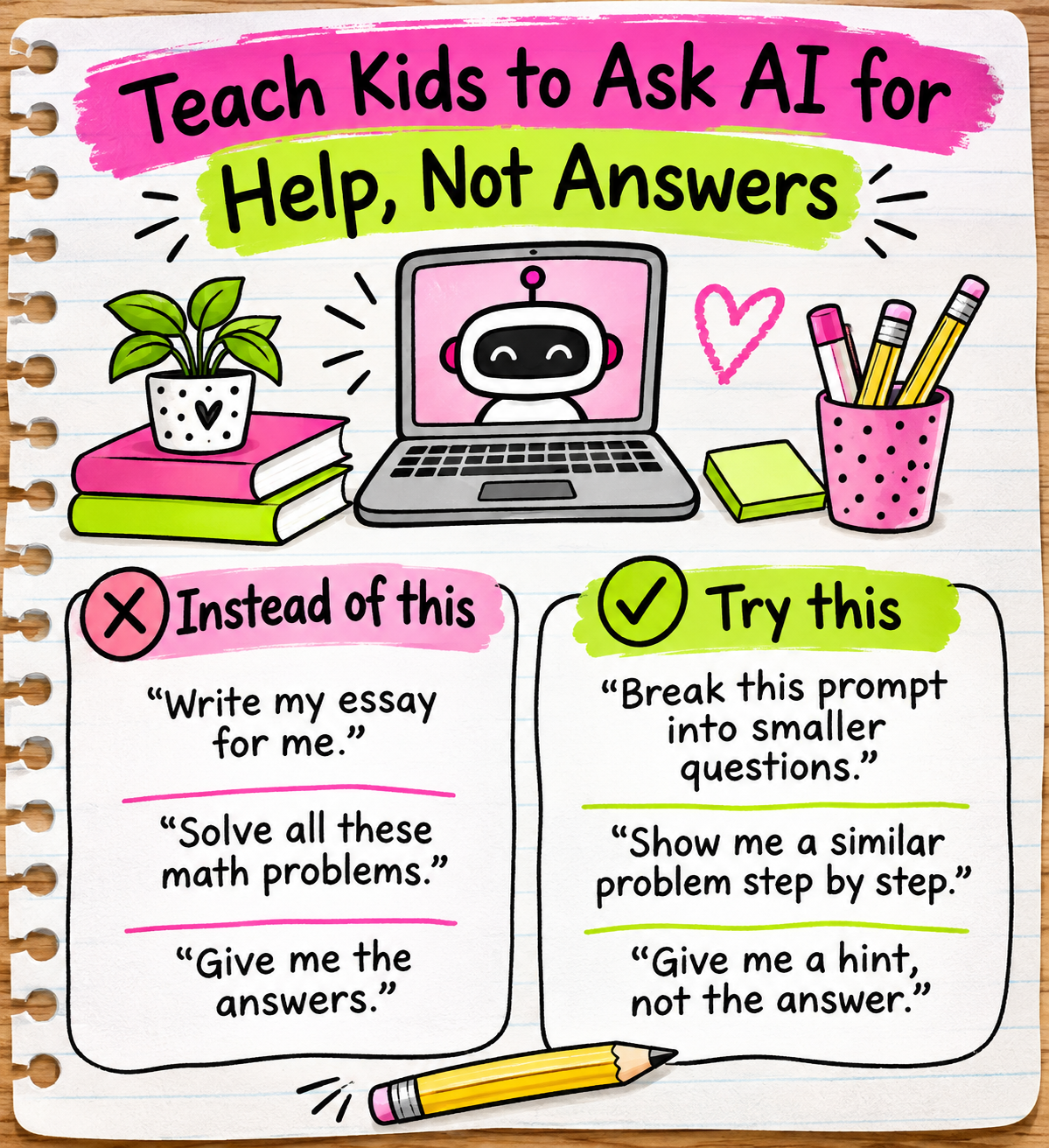
They're still doing the thinking. They're still coming up with their own ideas. They just needed a little help getting started.
We do something similar with math. Some students would rather ask AI to explain how to solve a problem than immediately ask me. They can ask it to work through a similar example, look at the steps, and then use what they've learned to complete the rest of their assignment.
And I've noticed something interesting. Some of our students are getting better at recognizing when they need their teacher and when they just need a little extra explanation.
If they're completely lost, they know they need to come to me. But if they understand most of the lesson and just need a reminder about one step, they can sometimes work through that with AI.
I actually like that they're learning to make those decisions. I don't want them sitting around waiting for me every time they have a question they might be able to work through independently.
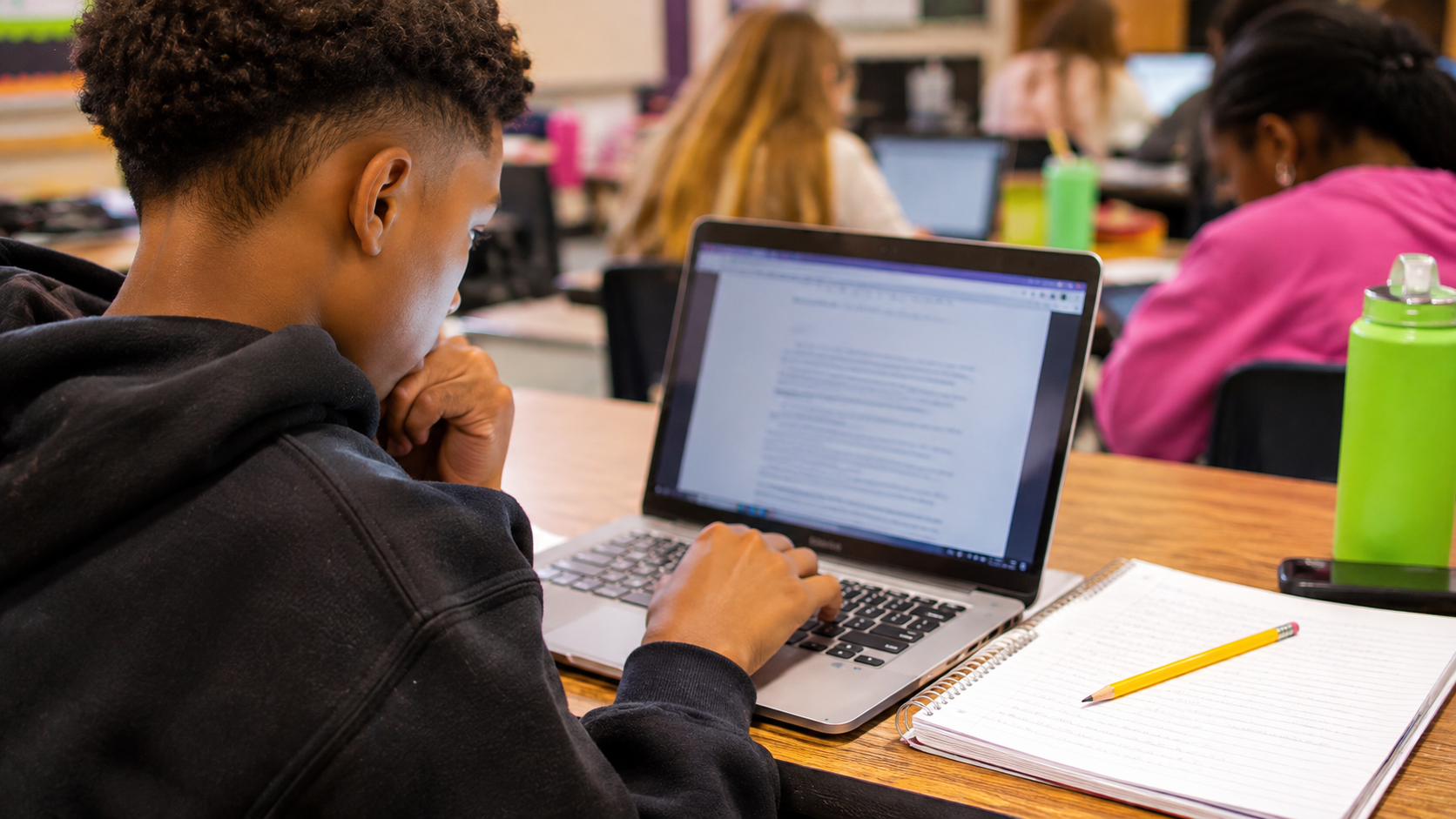
Of course, we also talk about how AI can be wrong. Just because it gives you an answer doesn't mean the answer is correct. Students still need to think about what they're reading, check their work, and ask questions when something doesn't make sense.
For me, that's part of teaching them how to use it responsibly.
Teachers Can Benefit From AI Too
After 16 years in education, I can tell you that teaching involves so much more than standing in front of a classroom delivering a lesson.
There's lesson planning, grading, parent communication, creating assignments, reviewing student progress, and figuring out how to reach students who aren't understanding the material. And that's before you even get into everything else that comes up during a normal school day.
I think AI has the potential to take some of that extra work off teachers' plates.
Let's say you're teaching fractions and have a group of students who are struggling. You can use AI to help create additional practice problems, come up with another way to explain the concept, or develop an activity that makes the lesson more engaging. At the same time, you can create something more challenging for the students who have already mastered the skill.
Teachers can also use it to help write rubrics, organize lesson plans, draft parent emails, create review games, and brainstorm classroom activities.
Does that mean everything AI creates is going to be perfect? Absolutely not. Teachers still need to review the material, make adjustments, and make sure it's appropriate for their students.
But if I can spend less time creating worksheets and more time actually working with my students, that's a benefit to me.
And I think a lot of teachers would agree.
What About School Administrators?
I don't think we talk enough about how AI can help the people responsible for running our schools.
Administrators are constantly managing information. They're looking at attendance, student performance, schedules, staffing, parent concerns, school improvement goals, and reports that have to be completed throughout the year.
AI can help organize information, summarize reports, identify patterns in data, and make some of those everyday tasks more manageable.
Imagine being able to review schoolwide academic data and more quickly identify which grade levels or subject areas may need additional support. Or using AI to help prepare a staff meeting agenda, organize professional development ideas, or draft a school newsletter.
Those things take time, and time is something school administrators never seem to have enough of.
Of course, schools have to be especially careful when it comes to student information. Personal student records shouldn't be entered into just any AI program, and schools need clear policies about which tools are approved and how information is protected.

AI shouldn't be making important decisions about students or staff. But it can help administrators organize information so they can make better-informed decisions themselves.
Are Some Students Going to Use AI to Cheat? Of Course.
Let's be realistic. There have always been students who look for the easy way out.
Before AI, students copied homework from each other, searched Google for answers, and found websites that would solve their math problems. AI has made it even easier to get an entire assignment completed without doing much work.
I'm not going to pretend that isn't happening.
But I also don't think we should ignore all the positive things AI can do because some students are going to misuse it.
That's where expectations come in.
Students need to understand the difference between using AI to help them learn and using AI to do their work for them.
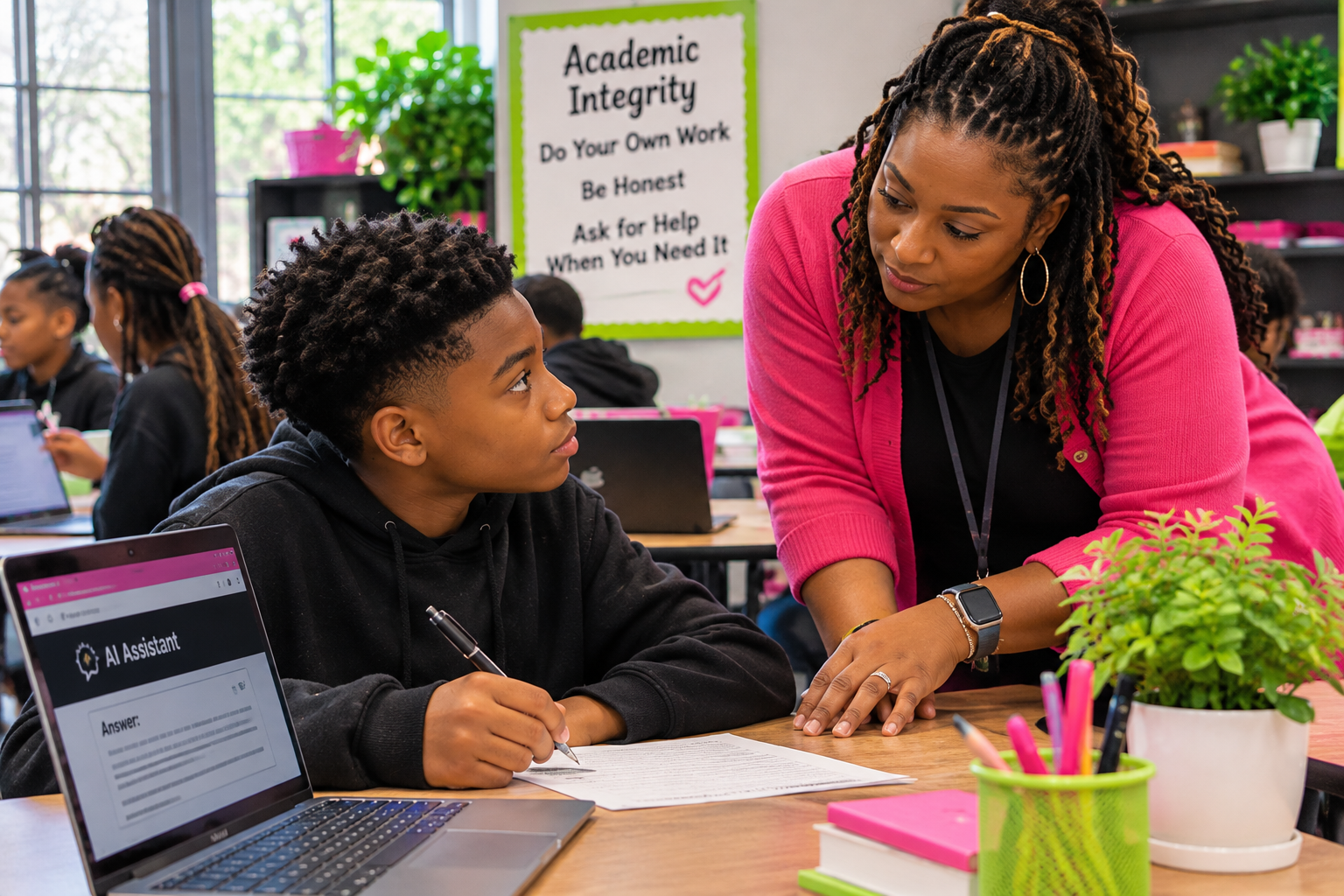
If a student asks AI to write an entire essay and turns it in as their own, they haven't really learned much from that assignment. But if they use AI to help organize their ideas, understand the directions, or get feedback on something they've already written, that's a completely different situation.
The same goes for math. If AI solves every problem, what happens when that student has to take a test without it? But if they use AI to understand an example and then work through the remaining problems on their own, they're actually practicing the skill.
And sometimes we need to ask students to explain their answers. Show me how you got there. Tell me why you chose that step. Walk me through your thinking.
Because at the end of the day, I don't just want to see the correct answer. I want to know that you understand how you got it.
We Still Have to Teach the Basics
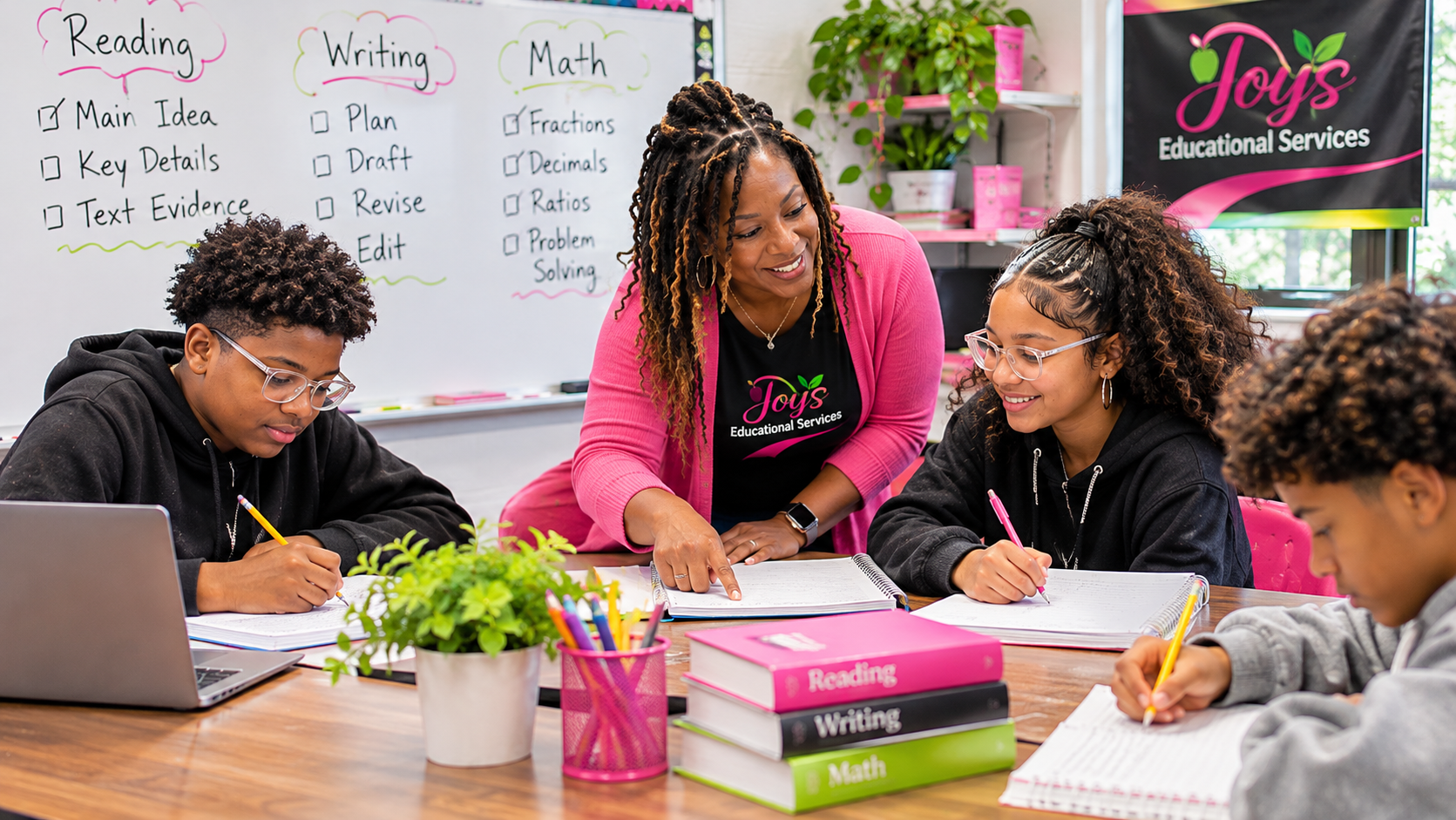
Now, just because I'm in favor of using AI doesn't mean I think students should use it for everything.
I still believe children need to know how to read, write, solve math problems, think through situations, and communicate their ideas without relying on technology.
There are times when students need to put the devices away and work through something on their own.
I don't want a student who can produce a beautiful five-paragraph essay with AI but can't write a paragraph independently. And I don't want a student who can get the answer to an algebra problem in seconds but doesn't understand basic multiplication or fractions.
Those foundational skills still matter.
The goal is to teach students when AI is helpful and when they need to do the work themselves.
That's also why I think educators need to be involved in teaching students how to use these tools. We can't just give children access to AI and expect them to automatically understand the difference between getting help and taking shortcuts.
We have to model it, practice it with them, and set expectations.
And we have to remember that AI isn't always accurate. Students need to learn how to question information, recognize when something doesn't make sense, and verify what they're being told.
Those are skills that will benefit them well beyond the classroom.
We Have to Grow With the Times
When I think about the technology available to students today compared to what we had growing up, it's pretty amazing.
I can remember a time when having a computer in your home wasn't something everyone had. Now students can access information from all over the world using a device that fits in their pocket.
Education is going to continue changing whether we're ready for it or not.
And I think we have a responsibility to grow with those changes.
That doesn't mean jumping on every new trend or assuming every new program is going to improve education. We still need to pay attention to what works, what doesn't, and how these tools are affecting our students.
But I also don't want us to become so afraid of change that we miss opportunities to help children learn.
I've seen how AI can help a student who needs a little extra explanation. I've watched students use it to break down writing assignments that initially seemed overwhelming. And I've seen how it can help them continue working when I'm assisting someone else.
Those may seem like small things, but in a learning environment where students have different needs, those little moments can make a difference.
I don't believe AI is going to replace good teachers. Students still need relationships, encouragement, accountability, and someone who understands how they learn.
But I do believe AI can become a valuable tool for teachers, administrators, and students when we take the time to use it correctly.
And just like computers didn't make handwriting disappear, I don't believe AI has to eliminate independent thinking.
We just have to make sure we're teaching students how to use the technology instead of allowing the technology to do all the thinking for them.
We can't keep preparing students for the world we grew up in. We have to prepare them for the world they're growing up in.
And whether we like it or not, AI is going to be part of that world.
So rather than spending all our time trying to figure out how to keep students away from it, I think we should be having more conversations about how to help them use it successfully.
I'm curious what other parents and educators are seeing. Are your students using AI as a learning tool, or are you finding that they're becoming too dependent on it? And what are you doing to help them find that balance?
I'd love to hear your thoughts.
Jennifer Jones
Founder, Joy's Educational Services
www.joyseducationalservices.org
Care first. Teach second.